



The Future of MLS: Trust, Technology, and the Power of Standards
 by
by For more than a century, the Multiple Listing Service (MLS) has quietly powered real estate markets. But today, as technology accelerates and global markets become more interconnected, MLS is no longer just a cooperative database — it is evolving into critical infrastructure.
In a recent conversation with Saul Klein, CEO of the San Diego MLS and one of the original architects behind Realtor.com, we explored where MLS came from — and where it is heading next.
His perspective offers a powerful lens into the future of MLS worldwide.
From Naval Navigation to Real Estate Data
Saul’s journey into real estate technology didn’t begin in brokerage — it began in the U.S. Navy.
Serving aboard the USS Elliot, one of the first fully computerized naval ships, Saul learned an essential lesson: trust in systems must be earned through reliability, redundancy, and accountability. When he left the Navy and entered real estate in 1977, he saw an industry still operating from printed books filled with listings.
To him, the opportunity was obvious:
If computers could navigate ships across oceans, they could certainly organize real estate data.
But the bigger shift wasn’t technological — it was cultural.
The Paradigm Shift: From Protecting Listings to Embracing Transparency
For decades, real estate professionals believed their value came from controlling information. Listings were guarded. MLS books were marked confidential. Access was limited.
The internet changed that mindset forever.
When Realtor.com launched in 1995, its founding principle was revolutionary at the time:
Instead of protecting data, expose it — responsibly.
By sourcing data directly from MLSs (not individual sellers), Realtor.com reinforced something critical:
MLS data is the “golden record.”
Why? Because it is:
- Rule-based
- Timely
- Verified
- Policed for accuracy
- Backed by contractual exclusivity
That foundation built consumer trust — and trust became the currency of the digital real estate era.
Why MLS Still Matters in a Portal World
Today, some question whether MLS is still relevant in a world dominated by portals and big brokerage tech stacks.
But here’s the reality:
The most successful portals — Zillow, Realtor.com, Homes.com, Redfin — still rely on MLS data feeds.
Why?
Because maintaining accurate, up-to-date, compliant listing data is extraordinarily difficult and expensive. MLS organizations have spent decades building governance frameworks, compliance systems, and institutional knowledge to ensure:
- Mandatory submission of listings
- Timely status updates
- Clear compensation structures
- Ethical enforcement
- Data integrity
That infrastructure doesn’t disappear simply because technology advances.
If anything, it becomes more valuable.
The New Pressures: Litigation, Regulation & Consolidation
The future of MLS will be shaped by four major forces:
- Litigation
- Regulation
- Legislation
- Consolidation
Antitrust scrutiny is redefining cooperation models. Large brokerages are building independent tech stacks. Governments are reevaluating market structures.
In some markets, like Dubai, MLS is being developed with strong government alignment — offering a top-down model focused on transparency and regulatory integration. In others, evolution will be more market-driven.
But one theme is clear:
Markets function better when real estate data is organized, standardized, and transparent.
The Global Opportunity: Standards First
If there were one “magic wand” solution to accelerate global MLS adoption, Saul’s answer was simple:
Standards.
Global data standards lower barriers, reduce costs, and enable cross-border innovation.
This is precisely where organizations like Real Estate Standards Organization play a critical role. By creating shared data dictionaries and technical frameworks, they allow markets to:
- Integrate faster
- Launch portals efficiently
- Support new proptech entrants
- Enable cross-border transactions
- Maintain data consistency
Without standards, every market reinvents the wheel.
With standards, global cooperation becomes possible.
The Core Principle: Transparency Builds Trust
At its heart, MLS is not just about listings.
It is about:
- Transparency
- Cooperation
- Accountability
- Consumer confidence
Transparency reduces risk.
Reduced risk increases participation.
Participation strengthens markets.
The future of MLS will not be defined solely by technology — but by how well MLS organizations articulate and protect this value proposition.
Why the Future Is Global
Real estate capital is increasingly international. Buyers move across borders. Investors diversify globally. Technology connects markets in real time.
The next phase of MLS evolution is not local — it is global.
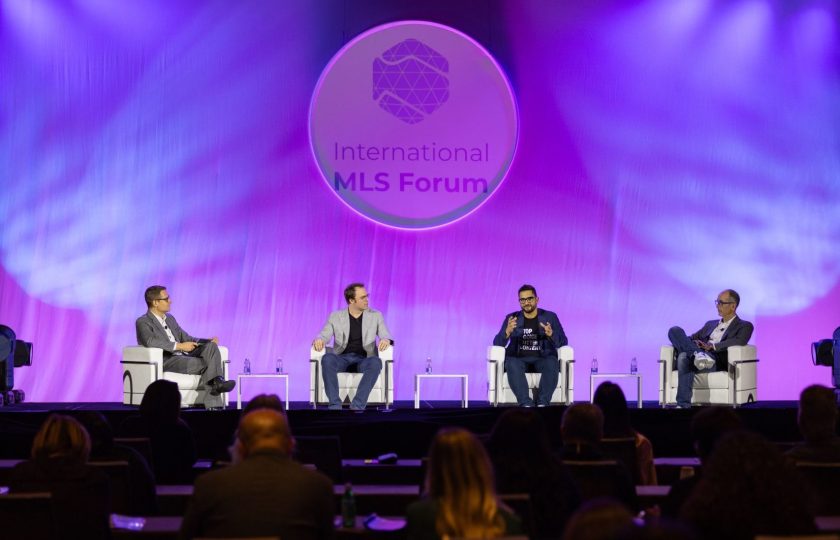
That’s why conversations at platforms like the International MLS Forum are so important. These gatherings bring together MLS leaders, regulators, brokers, and technology providers to discuss how data, licensing, and governance frameworks can align across markets.
The next forum will take place in Istanbul, Türkiye on November 16–17, 2026. The venue will be announced after arrangements are confirmed.
The Future of MLS
MLS is no longer just a cooperative database.
It is:
- A trusted data infrastructure
- A governance framework
- A transparency engine
- A market stabilizer
- A foundation for global interoperability
And in a world of AI, portals, litigation, and rapid technological change, one truth remains:
Markets work best when the data is accurate, timely, and trusted.
That is the future of MLS.
Interested in shaping the next chapter of global real estate data? Join the conversation at the International MLS Forum 2026 in Istanbul.